Diabetic Foot Ulcers: Early Warning Signs, Symptoms, and Treatment Options
December 17, 2025

A diabetic foot ulcer is one of the most serious complications associated with diabetes. These wounds often develop gradually and may not cause pain at first, making them easy to overlook. With early detection and proper care, however, diabetic foot ulcers can often be treated effectively and complications can be avoided.
Understanding the early warning signs, common symptoms, and what happens during the beginning stages of a diabetic foot ulcer is an important step in protecting long-term foot health.
What Is a Diabetic Foot Ulcer?
A diabetic foot ulcer is an open sore or wound that typically forms on the bottom of the foot, toes, or areas exposed to repeated pressure. These ulcers develop when diabetes affects the body’s ability to heal, often due to nerve damage, reduced circulation, and changes in skin integrity.
A diabetic foot ulcer may begin as a small area of irritation or breakdown, but without proper care, it can deepen and become more difficult to treat. Because sensation in the feet may be reduced, many people are unaware of an injury until it progresses.
Why People with Diabetes Are at Higher Risk
People with diabetes are more vulnerable to foot ulcers because several factors work together to slow healing and increase injury risk, including:
- Peripheral neuropathy, which reduces sensation in the feet
- Poor circulation, limiting oxygen and nutrients needed for healing
- Foot deformities, creating areas of increased pressure
- Dry skin and calluses, which can crack or break down
- Weakened immune response, increasing infection risk
These factors make even minor injuries more likely to worsen if not addressed early.
Early Warning Signs of a Diabetic Foot Ulcer
Recognizing changes early can help prevent an open wound from forming. The signs early stage diabetic foot ulcer on toe or other parts of the foot may include:
- Redness or darkened skin
- Swelling or warmth
- Thickened calluses
- Blisters or cracks in the skin
- Drainage visible on socks or shoes
- Changes in skin color or temperature
Noticing and addressing these signs early can make a meaningful difference in outcomes.
Common Diabetic Ulcer Foot Symptoms
Once an ulcer develops, diabetic ulcer foot symptoms may become more noticeable. These can include:
- An open sore that does not heal
- Drainage, pus, or fluid
- Swelling or redness around the wound
- A noticeable odor
- Minimal pain due to nerve damage
Because pain may be limited or absent, regular visual foot checks are especially important for people with diabetes.
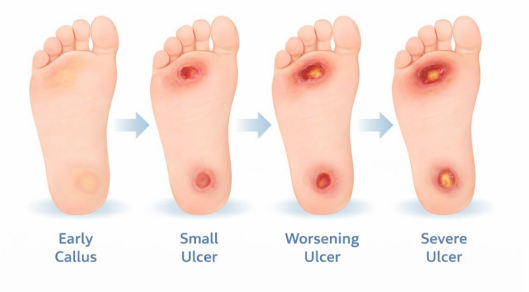
What Happens During the Beginning of a Diabetic Foot Ulcer
The beginning of a diabetic foot ulcer often starts with repeated pressure, friction, or unnoticed injury. A callus may thicken, the skin may weaken, and underlying tissue can become exposed. Without intervention, bacteria can enter the area, increasing the risk of infection and delayed healing.
Early podiatric evaluation at this stage can help prevent further tissue damage and support more effective healing.
Diabetic Foot Ulcer Treatment and Ongoing Podiatric Care
Treating a diabetic foot ulcer focuses on supporting healing while reducing the risk of infection and future complications. Because each ulcer is different, care plans are tailored based on the wound’s size, depth, location, and stage, as well as the patient’s overall health.
Professional diabetic foot ulcer treatment may involve careful wound monitoring, managing pressure on the affected area, addressing signs of infection, and supporting circulation when needed. Regular follow-up allows providers to track healing progress and adjust care as the wound improves.
Ongoing podiatric care also plays an important role in preventing long-term complications. Foot specialists help identify pressure points, monitor skin changes, and address risk factors that could slow healing or lead to recurrence. This proactive approach helps protect surrounding tissue and supports long-term foot health.
For more information about how diabetic foot ulcers are evaluated and managed, visit our Diabetic Ulcers service page.
Preventing Diabetic Foot Ulcers
Prevention is one of the most effective ways to reduce complications. Helpful steps include:
- Inspecting feet daily
- Wearing properly fitted shoes
- Keeping skin clean and moisturized (avoiding areas between toes)
- Managing calluses and nail care safely
- Scheduling regular foot exams
These habits help identify changes early and reduce the risk of injury.
When to See a Foot & Ankle Specialist
It’s important to seek professional care if you notice any changes in your feet:
- Skin color changes
- Open sores or drainage
- Swelling or warmth
- Signs of infection
- Any wound that does not improve
For individuals with diabetes, regular foot evaluations are especially important, even when there is no pain or visible injury. Routine checkups allow potential issues to be identified early, before they develop into a diabetic foot ulcer or lead to complications. Ongoing monitoring is one of the most effective ways to protect long-term foot health.
Protecting Your Foot Health
A diabetic foot ulcer is a serious condition, but early recognition and professional care can make a significant difference. If you notice changes in your feet or signs of skin breakdown, the team at Foot & Ankle Specialists of Utah is here to help with personalized evaluations and treatment plans.
Book an appointment today to address concerns early, support proper healing, and protect your long-term foot health.
Schedule an Appointment Today!
If any of these signs or symptoms sound familiar to you, don’t wait! Schedule an appointment with one of our specialists TODAY and get back to living your best life! For more tips, tricks, and helpful information, be sure to check out our social media accounts!